This department is located on the Arlandaweg 161
info@acibademimc.com
What does Internal Medicine involve?
Internal Medicine is the specialty concerned with the prevention, diagnosis, and treatment of diseases of the internal organs. Our internists serve as the central specialists of Acibadem International Medical Center. They work closely with other specialties and referring physicians. Special areas of focus include type 2 diabetes mellitus, chronic kidney disease, overweight/obesity, and high blood pressure. Hormonal disorders are also treated.
Please note that the Department of Internal Medicine does not treat malignancies (cancer), type 1 diabetes, allergies, or acute medical conditions. The department also does not perform gastro- or colonoscopies; for these procedures, you can visit the Department of Gastroenterology, Hepatology and Endoscopy.
Which conditions do our internists treat?
The internists at Acibadem IMC treat a wide range of conditions. You can visit our Department of Internal Medicine for, among others, the following:
1. Chronic Fatigue Syndrome
There are different types and causes of fatigue. It can be pathological (caused by disease) or physiological (not caused by disease). In 80–90% of people with severe fatigue, symptoms resolve within several weeks to months. In a small proportion (less than 20%), fatigue persists for longer than six months. In that case, Chronic Fatigue Syndrome (CFS) may be present.
CFS is a collective term for severe fatigue symptoms that currently cannot be attributed to a clearly identifiable disease. At our outpatient clinic, we investigate whether there are other causes of fatigue and initiate treatment if necessary. If no underlying internal medical cause is found, the patient is generally referred back to the general practitioner.
2. Diabetes Mellitus Type 2
There are several types of diabetes. At Acibadem, we treat only type 2. Diabetes mellitus type 2 is the most common form of diabetes. Approximately 90% of people with diabetes have type 2 diabetes.
This form usually develops gradually and at a later age, although it can also occur in younger individuals. Causes may vary. The body may become less sensitive to insulin, or the pancreas may produce less insulin.
In type 2 diabetes, our internists often recommend a combination of lifestyle modification, medication, and—if necessary—insulin therapy. In some cases, weight loss can lead to improvement or even remission of the disease.
3. Chronic Kidney Disease
The kidneys function as filters: they remove waste products from the blood and ensure these leave the body through urine. In kidney damage, the kidney filters are impaired. This may occur suddenly (acute) or develop gradually and worsen over time (chronic).
Kidney damage can be caused by high blood pressure, diabetes mellitus, hereditary kidney disease, and lifestyle factors. At our outpatient clinic, patients with (suspected) kidney disease and chronic kidney damage are evaluated.
4. High Blood Pressure
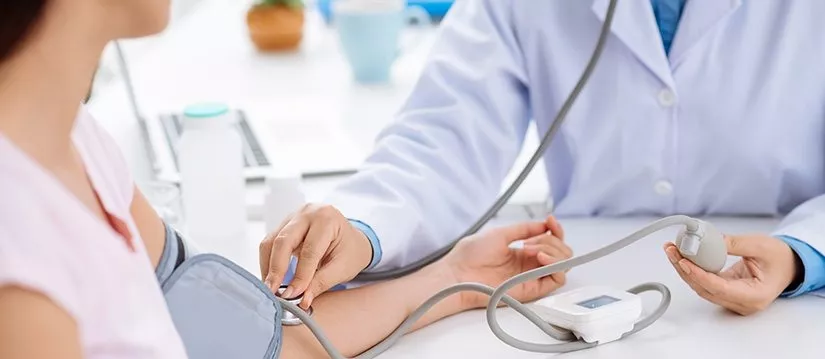
Blood pressure can be described as the pressure within your blood vessels. When your heart contracts and pumps blood through the body, the pressure is highest (systolic pressure). When the heart relaxes, the pressure decreases (diastolic pressure). Blood pressure therefore fluctuates continuously.
To determine whether someone has high blood pressure, measurements at different times are evaluated (preferably using 24-hour monitoring). Treatment focuses on achieving target blood pressure through lifestyle changes and, when necessary, medication to prevent or limit damage to organs such as the kidneys, eyes, heart, and brain.
In some cases, additional investigation into the underlying cause is required (for example, when high blood pressure is detected before age 30 or when target levels are not reached despite multiple medications).
5. Thyroid Disorders
The thyroid is a small organ located near the larynx that produces and releases hormones. Thyroid disorders can cause various symptoms, depending on the specific condition.
Some symptoms result from too much or too little thyroid hormone. Others arise when the thyroid gland is enlarged.
Possible thyroid conditions include hypothyroidism (for example, Hashimoto’s disease), in which the thyroid produces too little hormone, and hyperthyroidism, in which too much hormone is produced.
With insufficient hormone levels, symptoms may include sluggishness, sensitivity to cold, fatigue, and weight gain. With excess hormone levels, symptoms may include restlessness, palpitations, excessive sweating, fatigue, and weight loss. Treatment depends on the underlying cause.
Thyroid nodules are usually benign, but at Acibadem IMC they are evaluated to provide certainty. If symptoms persist despite normal blood values, medication adjustments or underlying causes are investigated.
In case of pregnancy or a wish to conceive, we collaborate with the gynecologist to ensure safe management of a well-controlled thyroid disorder.
6. Thyroid Cytology via Ultrasound (performed by Radiology)
Cytology refers to the examination of cells. During a cytological puncture, a thin needle is used to remove a small amount of cells and tissue from the area being examined.
Ultrasound is an imaging technique that uses sound waves. A handheld device is placed on the skin that emits sound waves. These waves enter the body and are reflected differently by tissues. The returning echoes are captured by the same device and displayed on a monitor using a computer.
7. Iron Deficiency
Increasing scientific evidence is available about iron deficiency. There are various possible causes. At Acibadem, we investigate the underlying cause and determine the most appropriate treatment.
In principle, we always start with iron supplementation in tablet form. Only when this proves insufficient or when there are contraindications do we switch to intravenous iron therapy.
Visiting ACIBADEM IMC
To visit our Department of Internal Medicine, you need a referral from your general practitioner or medical specialist. Once you have received this referral, you can schedule an appointment directly by calling +31 (0)85 120 0100.
You can also request an appointment via our website using the appointment form or by sending an email to afspraak@acibademimc.com. We will contact you within 24 hours.